Preventing cross-contamination in a dental office requires more than wearing gloves. It demands consistent habits, clear procedures, and careful attention to every treatment area. The question is practical: How to prevent cross-contamination in a dental office without creating gaps during busy appointments? The answer begins with reliable infection prevention systems that protect patients, dental professionals, and support staff.
This guide presents the top 10 ways to reduce contamination risks throughout the workday. It covers hand hygiene, personal protective equipment, instrument sterilization, surface disinfection, dental unit waterline care, and safe waste handling. It also considers small details, such as changing gloves before touching a keyboard or replacing a barrier after an aerosol-producing procedure. These actions may seem routine. They still matter.
Evidence-based recommendations from organizations such as the CDC and professional dental associations support these practices. However, no protocol is flawless. A rushed room turnover, a missed cabinet handle, or unclear staff communication can weaken an otherwise strong system. Regular training, documented checklists, and honest reviews help reveal those weaknesses. Real improvement comes from noticing what went wrong, not pretending every procedure worked perfectly. This introduction sets the stage for practical, defensible strategies that dental teams can apply consistently, measure carefully, and improve over time.
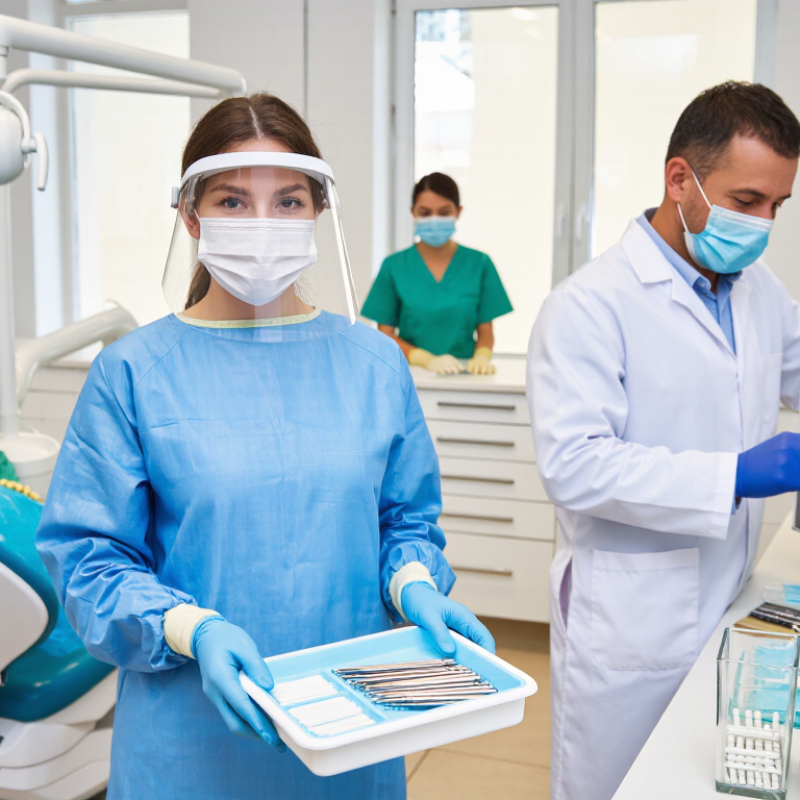
Hand hygiene is the foundation of dental office infection control. Staff should clean their hands before and after every patient contact. This includes contact with instruments, surfaces, and protective equipment. Use alcohol-based hand rub when hands look clean. Wash with soap and water when they are visibly soiled. Clean hands matter.
Gloves never replace hand hygiene. Change gloves between patients and whenever they tear, become heavily contaminated, or touch an unintended surface. Wear a clean mask, eye protection, and protective clothing during procedures that may create splashes or aerosols. Remove PPE carefully, because contaminated sleeves and gloves can touch clean skin. Keep clean and used items physically separate. Small gaps spread risk.
A practical protocol should show each step near the treatment area. It should also define who checks supplies and records training. In busy clinics, staff may rush after an unexpected emergency. That is where mistakes happen. A short pause at the doorway can prevent contaminated gloves from reaching keyboards or drawer handles. Teams should observe one another respectfully and correct unsafe habits immediately. Even experienced professionals miss steps sometimes. Regular audits, realistic drills, and updated guidance help reveal those weak points. A policy that no one follows is only paper.
Top 10 Ways to Prevent Dental Office Cross Contamination
Dental treatment areas need cleaning between every patient. Remove disposable barriers carefully, without snapping contaminated materials. Wipe the chair controls, light handles, trays, countertops, and drawer pulls with an approved healthcare disinfectant. Follow the product’s contact time. A surface may look clean and remain unsafe.
Reusable dental instruments require careful handling. Place used instruments in a closed, labeled container before transport. Do not carry loose instruments through the office. Clean them using manual or mechanical methods designed for the instrument type. Inspect hinges, grooves, and lumens under good lighting. Soil can hide in tiny spaces. Package instruments after drying, then sterilize them according to validated cycle instructions. Record each cycle, and review monitoring results regularly.
Staff should wear appropriate gloves, masks, eye protection, and protective clothing during instrument processing. Change gloves between tasks, and perform hand hygiene whenever gloves are removed. Keep sterile packs dry and intact until use. A torn pouch is not sterile protection. Training should include demonstrations, competency checks, and honest reporting of missed steps. No protocol stays perfect. A forgotten light handle or rushed drying stage deserves correction, not concealment. Review workflow when errors repeat, because the safest process is one staff can follow during a busy afternoon.
Safe sharps handling begins before treatment starts. Keep a rigid, puncture-resistant container within arm’s reach of the dental chair. Never leave a used needle on a tray. The CDC recommends immediate disposal and prohibits bending, breaking, or recapping needles with both hands. If recapping is necessary, use a one-handed technique or a mechanical device. OSHA requires sharps containers to remain closable, leak-resistant, and accessible at the point of use. Small details matter.
NIOSH estimates that 600,000 to 800,000 needlestick injuries occur annually among U.S. healthcare workers, although underreporting remains a concern. Dental teams should report every exposure, even when the skin appears intact. Waste segregation also needs discipline. The World Health Organization estimates that about 15% of healthcare waste is hazardous, including infectious materials and sharps. Place contaminated gauze, suction tips, and disposable barriers into correctly labeled regulated-waste containers. Do not overfill them. A full container invites compression, spills, and hand injuries.
In practice, rushed room turnover can weaken good procedures. A quick visual check may be skipped. That is where prevention becomes fragile. Review container placement during staff training, document pickup procedures, and replace damaged containers immediately. Mistakes can still happen. Honest reporting helps reveal them.
Prevent Cross Contamination Through Effective Waterline Management
Dental unit waterlines can develop biofilm inside narrow tubing. This hidden layer can release bacteria into handpieces, syringes, and patient mouths. The CDC recommends dental treatment water meet the drinking-water standard of no more than 500 colony-forming units per milliliter. This threshold appears in its Guidelines for Infection Control in Dental Health-Care Settings, 2003.
Use a documented waterline protocol every day. Flush lines at the start of treatment and between patients, following current infection-control guidance. Disinfect and maintain the system according to the dental unit manufacturer’s instructions. Test water periodically through a qualified laboratory. Keep results with maintenance records. For surgical procedures, use sterile water or sterile saline delivered through an appropriate system, as advised by the CDC.
A clean cup proves little. Biofilm can remain unseen. OSAP guidance also stresses regular treatment, monitoring, and staff training. Assign responsibility to named team members, not “everyone.” That wording often means nobody. A rushed morning can undo careful preparation. Staff should check reservoirs, tubing, valves, and flushing time before patients arrive. No protocol is flawless. Review failures without blame, then adjust the schedule, testing frequency, or training. The goal is not merely clear water. It is controlled exposure, reliable records, and safer care.
Top 10 Ways to Prevent Dental Office Cross Contamination
Staff training and regular infection control audits turn written policies into daily habits. The CDC’s 2016 Summary of Infection Prevention Practices in Dental Settings recommends role-specific training before duties begin and repeated competency checks. OSHA’s Bloodborne Pathogens Standard also requires annual employee training. These requirements matter at the sink, not just in the handbook.
Keep it practical. A trained assistant should explain each step while preparing instruments: hand hygiene, glove changes, surface barriers, and sterilizer loading. Use a short checklist. Audit it monthly. Watch the process directly, including instrument transport and storage. Review sterilization records, chemical indicators, and failed cycles. The CDC specifically advises assigning an infection prevention coordinator and documenting competency. Small gaps can spread quickly.
Make the audit measurable. Sample ten procedure rooms, five sterilization logs, and several staff observations each month. Record missed hand hygiene, uncovered supplies, or unclear labeling. Give feedback the same day. No blame. One missed step still matters. A review may reveal that experienced staff skip details during busy periods. That finding should change the workflow, not be hidden. Re-train after equipment changes, new procedures, or audit failures. The process will never be perfect. Regular questioning keeps it safer.
| No. | Prevention Measure | Required Practice | Recommended Frequency | Audit Evidence | Primary Risk Addressed | Priority |
|---|---|---|---|---|---|---|
| 1 | Train and Competency-Check All Staff | Provide infection-control training during onboarding and at least annually. Verify competency in hand hygiene, personal protective equipment, instrument processing, environmental cleaning, and injection safety. | Onboarding, annually, and when procedures change | Training register, competency checklist, attendance record, and corrective-action log | Inconsistent procedures and avoidable human error | Critical |
| 2 | Perform Hand Hygiene at the Correct Times | Clean hands before and after each patient, before aseptic tasks, after contact with potentially contaminated surfaces, and immediately after glove removal. Use alcohol-based hand rub when hands are not visibly soiled; wash with soap and water when visibly soiled. | Every applicable patient-care interaction | Direct-observation audit and documented feedback | Transfer of microorganisms between patients, staff, and surfaces | Critical |
| 3 | Use Personal Protective Equipment Correctly | Select gloves, masks, eye protection, and protective clothing according to the anticipated exposure. Change gloves between patients and between contaminated and clean tasks; never wash or reuse disposable gloves. | For every procedure requiring protection | PPE-use observation, supply inspection, and incident reports | Exposure to blood, saliva, respiratory droplets, and contaminated debris | High |
| 4 | Use Safe Injection Practices | Prepare injections in a clean area using aseptic technique. Use a new sterile needle and syringe for every injection and never enter a medication container with used equipment. | Every injection and medication preparation | Procedure observation, medication-area inspection, and sharps incident review | Bloodborne pathogen transmission through contaminated injections | Critical |
| 5 | Process Reusable Instruments Correctly | Transport contaminated instruments safely, clean them before sterilization, package them appropriately, sterilize according to validated instructions, and store them in a way that preserves package integrity. | Every instrument-processing cycle | Sterilizer cycle records, chemical indicators, biological monitoring records, and maintenance logs | Reuse of instruments carrying viable microorganisms | Critical |
| 6 | Monitor and Document Sterilization | Use mechanical and chemical indicators for each load and perform biological monitoring at the interval required by applicable guidance and local regulations. Investigate failed tests before releasing affected instruments for use. | Each load; biological monitoring at the required interval | Load logs, indicator results, biological-monitoring reports, and failure investigations | Undetected sterilization failure | Critical |
| 7 | Clean and Disinfect Clinical Contact Surfaces | Clean and disinfect frequently touched clinical surfaces between patients or use disposable barriers that are changed between patients. Follow the disinfectant’s labeled contact time and use instructions. | Between patients and when visibly contaminated | Room-turnover checklist, observation audit, and disinfectant-use review | Indirect transmission from contaminated environmental surfaces | High |
| 8 | Manage Dental Unit Waterlines | Maintain and monitor dental unit water systems according to applicable public-health requirements and manufacturer instructions. Use appropriate water quality controls and document maintenance and testing. | According to the written waterline maintenance schedule | Maintenance log, water-quality test results, treatment records, and corrective actions | Exposure to microbial contamination in treatment water | High |
| 9 | Handle Sharps and Regulated Waste Safely | Do not recap needles using two hands. Use an approved one-handed technique or a mechanical device when recapping is necessary, and place sharps immediately into closable, puncture-resistant containers located near the point of use. | Every sharps-handling activity | Sharps-container inspection, injury log, and workplace observation | Needlestick injuries and bloodborne pathogen exposure | Critical |
| 10 | Audit Compliance and Correct Deficiencies | Use a written checklist to review hand hygiene, PPE, injection safety, instrument processing, environmental cleaning, waterline maintenance, and staff training. Assign owners and deadlines for every deficiency, then verify completion. | Monthly review with a formal quarterly trend analysis | Completed audit forms, compliance trends, action plans, and follow-up verification | Unrecognized gaps and repeated control failures | Critical |
| Audit note: Adapt frequencies and procedures to current local regulations, occupational-safety requirements, public-health guidance, and the written instructions for the equipment and products in use. | ||||||
Keep a rigid, puncture-resistant container within arm’s reach of the dental chair. Accessibility prevents reaching across trays.
Dispose of it immediately. Never leave it on a tray, bend it, or break it.
Avoid recapping whenever possible. If necessary, use one hand or a mechanical device, never both hands.
Place contaminated gauze, suction tips, and disposable barriers into correctly labeled containers. Keep materials separated properly.
Replace containers before they become full. Overfilled containers may cause compression, spills, or hand injuries.
Yes. Report every exposure, even when the skin looks intact. Honest reporting reveals weak procedures.
Flush waterlines before treatment and between patients. Follow the documented maintenance schedule carefully.
Disinfect and maintain tubing according to equipment instructions. Test water periodically through a qualified laboratory.
Use sterile water or sterile saline through a suitable delivery system. Regular treatment water may not be enough.
Assign duties to named team members. “Everyone” can mean nobody. Review failures without blame.
Preventing cross-contamination in a dental office requires consistent infection control practices at every stage of patient care. How to prevent cross-contamination in a dental office begins with thorough hand hygiene before and after each appointment, along with appropriate gloves, masks, eye protection, and protective clothing. Treatment areas should be cleaned and disinfected between patients, while reusable instruments must be properly cleaned, packaged, sterilized, and stored. Frequently touched surfaces and equipment should receive special attention to reduce the spread of microorganisms.
Safe sharps handling is also essential. Needles and other sharp items should be placed immediately into approved puncture-resistant containers, and clinical waste must be separated and disposed of correctly. Dental unit waterlines should be maintained through routine flushing, monitoring, and cleaning procedures to help control microbial buildup. Finally, all staff members should receive regular infection control training, follow written procedures, and participate in audits. Ongoing reviews help identify weaknesses, reinforce accountability, and maintain a safer environment for patients and the dental team.

Barclay Medical