Choosing the China best dental chairs is not only about appearance, upholstery, or advanced controls. It is about how the chair supports every clinical movement. A dentist may lean forward hundreds of times during a busy day. A poorly positioned backrest can strain the neck, shoulders, wrists, and lower back. Ergonomic seating helps maintain a balanced working posture while keeping the patient stable and comfortable.
Why is ergonomic seating important for dentists? It reduces unnecessary reaching and twisting during examinations, cleanings, and restorative procedures. Adjustable height, smooth positioning, firm lumbar support, and accessible controls can make treatment more precise. These features also help dental assistants transfer instruments efficiently. A well-designed chair creates a clearer working zone around the patient. Small details matter.
Patient comfort matters too. A supportive cushion, steady headrest, and gentle movement can reduce anxiety before treatment begins. Patients notice sudden noise, pressure points, and awkward positioning. A calmer experience may improve communication and cooperation. However, no chair solves every ergonomic problem. The operator still needs proper training, regular movement, and a workspace designed around real clinical habits.
Manufacturers in China offer many dental chair configurations, but quality should be evaluated carefully. Buyers should review load capacity, adjustment range, material durability, cleaning requirements, warranty terms, and service support. Independent testing and documented manufacturing standards provide stronger evidence than attractive product claims. The best choice is practical, not merely impressive. A chair should support dentists throughout long appointments while protecting patient dignity, clinical efficiency, and consistent care. Pain should not be accepted as normal.
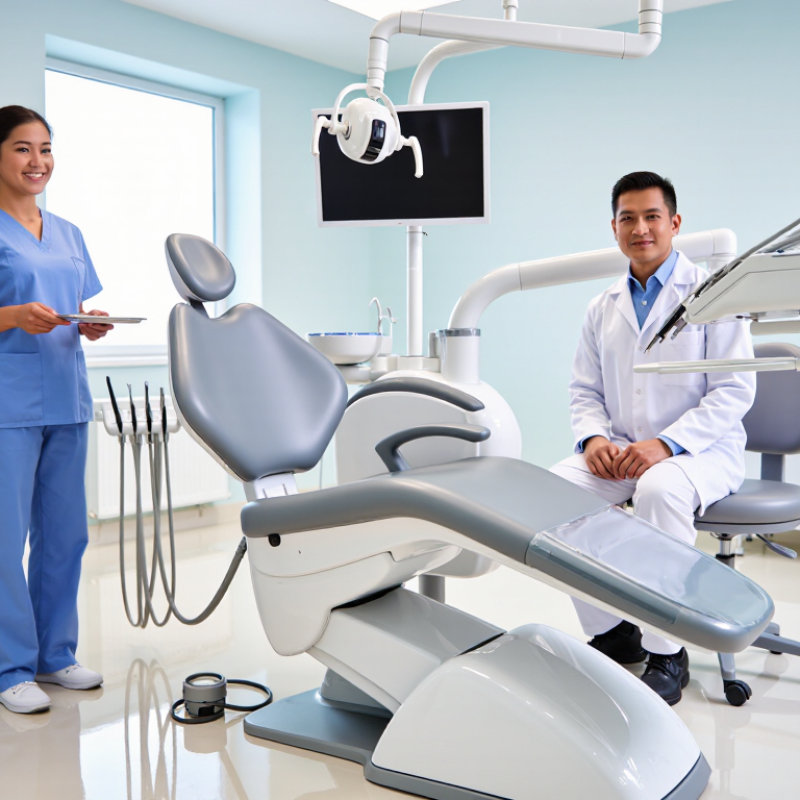
When evaluating dental chairs in China, ergonomics should begin with the operator’s posture, not the chair’s appearance. A dental chair is ergonomic when it supports neutral positioning during long procedures. Its backrest should allow close patient access without forcing the dentist to twist. A narrow upper back can improve legroom for the assistant. Adjustable height is essential for different clinicians and treatment positions.
Small details matter.
A 2022 systematic review in the International Dental Journal reported musculoskeletal symptoms among dental professionals at rates of roughly 60% to 90%. Lower-back, neck, and shoulder discomfort appeared frequently. These figures show why ergonomic seating needs more than soft padding. The chair should provide stable lumbar support, balanced pressure distribution, and smooth height adjustment. Foot controls can reduce repeated reaching. Seamless upholstery also helps maintain hygiene and prevents awkward cleaning movements.
From practical observation, the best setup keeps the clinician’s elbows near the body and the head slightly inclined, not bent sharply. That matters. A chair should move quietly and steadily, while its base remains stable during repositioning. FDI World Dental Federation guidance also emphasizes neutral posture, four-handed dentistry, and suitable equipment placement. Yet no chair corrects poor habits completely. Teams still need training, scheduled micro-breaks, and periodic posture reviews.
One uncomfortable truth remains: “ergonomic” specifications can look convincing, but real comfort must be tested during an actual procedure.
Ergonomic seating supports both dentist and patient comfort throughout a dental procedure. A dentist may lean forward for hours, often working within a narrow visual field. Without proper support, the neck, shoulders, and lower back can become tense. Small discomforts can gradually affect concentration and hand control.
An adjustable dental chair helps maintain a more natural working posture. Its height should allow the dentist’s elbows to stay close to the body. A supportive backrest can reduce pressure around the lumbar area. A flexible headrest keeps the patient’s head stable during detailed treatment. That matters when the dentist is working near the molars. Patients also feel less strain when their knees, neck, and back are properly supported.
Comfort is not only about soft padding. Easy controls, smooth movement, and stable positioning reduce unnecessary interruptions. A quiet adjustment can help an anxious patient feel more secure. In practice, even a small gap under the neck may become irritating after thirty minutes. I have also learned that one position does not suit every patient. Taller adults, children, and people with limited mobility need different adjustments.
Ergonomic design can improve communication as well. When the patient is not constantly shifting, the dentist can focus more clearly. Still, comfort should be checked during treatment, not assumed from the chair’s appearance. Ask simple questions. Watch body language. A well-designed chair supports clinical work, but careful human adjustment remains essential.
In daily clinic testing, the best dental chairs in China support patient comfort and precise clinical work. The seat should distribute pressure across the hips and thighs, rather than forcing patients to slide forward. A contoured backrest, adjustable headrest, and smooth motorized positioning help clinicians maintain a neutral posture. Shorter reach means less shoulder strain. Armrests should move away easily, especially when assisting older patients or children. The controls must respond quietly and predictably. Small details matter.
Reliable dental chairs also need durable, seamless upholstery that tolerates frequent disinfection without cracking. Rounded surfaces reduce dirt collection around joints and seams. Waterlines should be accessible for routine cleaning, while the suction system needs stable flow during long procedures. Foot controls can keep the operator’s hands focused on treatment. Anti-crush sensors and an emergency stop add practical protection, not decorative features.
A serious evaluation should include a real chair trial, not only a catalogue review. Ask whether the lowest height suits shorter clinicians and whether the headrest supports different patient sizes. Check movement noise, pedal sensitivity, and the availability of replacement parts in China. Documented quality testing and clear maintenance instructions improve purchasing confidence. No chair is perfect. A model may feel excellent during a ten-minute demonstration but reveal awkward access after a full clinic session. Feedback from dentists, assistants, and patients should shape the final decision.
China Best Dental Chairs: Why Is Ergonomic Seating Important?
Ergonomic seating can improve clinical efficiency and safety during long procedures. EU-OSHA reported that about 60% of European workers experienced musculoskeletal complaints in 2019. Dental professionals face even greater exposure to static posture, repetitive movement, and limited working space. A 2022 systematic review reported frequent neck and lower-back pain among dental professionals, although estimates varied between studies.
A well-designed dental chair supports neutral posture without restricting access. Adjustable lumbar support reduces slouching. A narrow backrest helps the clinician move closer to the patient. Smooth height adjustment limits repeated bending and awkward reaching. Stable positioning also improves visibility during delicate procedures. Less repositioning can reduce interruptions and hand fatigue. That matters when concentration is already under pressure.
Safety needs more than soft padding. The chair should move predictably, protect fingers near moving joints, and provide stable support during entry and exit. The U.S. National Institute for Occupational Safety and Health identifies awkward posture and static loading as major ergonomic risks. Still, a chair is not a cure-all. Incorrect adjustment can create new strain. Staff training, operator positioning, and regular equipment checks remain essential. Small details matter.
| Ergonomic Design Dimension | Reference Design Data | Clinical Efficiency Benefit | Safety and Health Benefit | Relevant Ergonomic Principle or Standard |
|---|---|---|---|---|
| Patient Chair Height | A commonly used design range is approximately 400–800 mm from the floor to the patient support surface, depending on the chair configuration and clinical procedure. | Allows the clinician to select a working height suited to restorative, endodontic, surgical, and examination procedures. | Reduces excessive trunk flexion, shoulder elevation, and awkward wrist angles during prolonged treatment. | Ergonomic workstation adjustability; ISO 6385 principles for adapting work design to the user. |
| Backrest Positioning | Dental patient chairs commonly provide movement from an upright position of about 90° to a near-horizontal position of about 180°. | Improves access to anterior, posterior, and maxillary treatment areas without repeatedly repositioning the patient manually. | Supports stable patient positioning and helps reduce sudden reaching or twisting by the clinical team. | Patient chair performance and safety considerations are addressed by ISO 6875. |
| Headrest Adjustment | A multi-position or articulating headrest is recommended so that head and neck support can be adjusted for different patient heights and treatment zones. | Provides more consistent access and reduces the need for frequent manual head repositioning. | Helps maintain cervical support and reduces unwanted patient movement during precision procedures. | Anthropometric accommodation and neutral-posture principles; ISO 7250-1 and ISO 11226. |
| Operator Stool Height | A typical adjustable operator stool range is approximately 450–650 mm, subject to the clinician’s height, operating position, and chair height. | Enables seated work at an appropriate relative height to the patient’s oral cavity and improves visual access. | Supports stable pelvic positioning and may reduce lower-back, neck, and shoulder strain. | Adjustability and neutral working posture are core principles of ergonomic workstation design. |
| Seat Support and Depth | A contoured seat with adjustable or appropriately selected depth should support the thighs without pressing behind the knees; a common seat-depth reference is approximately 380–450 mm. | Improves seated stability during long procedures and makes fine hand movements easier to control. | Reduces pressure behind the knees and helps maintain a balanced pelvis and supported lumbar region. | Anthropometric fit based on user body dimensions; ISO 7250-1. |
| Lumbar and Pelvic Support | The back-support contour should follow the user’s lower back and permit an upright, balanced sitting posture rather than forcing a fixed spinal position. | Helps the clinician maintain a consistent operating position during procedures lasting 30 minutes or longer. | May reduce static muscle loading associated with unsupported or forward-flexed sitting. | Neutral posture and avoidance of prolonged constrained postures; ISO 11226. |
| Instrument Reach Zone | Frequently used instruments and controls should be positioned within the primary reach area, commonly about 300–400 mm from the operator’s working position where the operatory layout permits. | Decreases unnecessary reaching, hand-offs, and interruptions during treatment. | Reduces shoulder abduction, trunk rotation, and the risk of accidentally contacting equipment or the patient. | Workstation layout should prioritize the most frequently used items and minimize excessive reach. |
| Arm and Elbow Clearance | Armrests, delivery systems, and side supports should not obstruct the clinician’s elbow path or force sustained shoulder elevation during instrument use. | Facilitates smoother instrument transfer and more precise hand control. | Helps limit repetitive shoulder loading and contact hazards around the patient chair. | Design for neutral joint angles and unobstructed movement; ISO 6385. |
| Foot Control Placement | Foot controls should remain stable, easy to identify by touch, and positioned so that activation does not require excessive ankle rotation or leg extension. | Allows hands to remain focused on instruments and the treatment field. | Reduces unintended activation and minimizes awkward lower-limb movement. | Controls should be accessible, distinguishable, and arranged to reduce operating errors. |
| Smooth Powered Movement | Powered chair movements should include controlled speed, stable stopping, and protection against unintended movement or crushing points. | Speeds up patient positioning while reducing workflow interruptions. | Helps protect patients, clinicians, and assistants from impact, entrapment, or sudden movement hazards. | Dental unit and patient chair safety requirements; ISO 7494-1 and ISO 6875. |
| Cleanable Upholstery and Seam Design | Smooth, non-absorbent, disinfectant-compatible surfaces with minimized seams and gaps support routine cleaning between patients. | Makes turnover procedures more consistent and reduces cleaning-related delays. | Limits the retention of contaminants and supports infection-prevention protocols when used with validated disinfectants. | Material compatibility and cleaning procedures must follow the equipment manufacturer’s instructions and local infection-control requirements. |
Choosing an ergonomic dental chair should begin with operator movement, not upholstery. A 2022 systematic review in the International Journal of Environmental Research and Public Health found that musculoskeletal symptoms affected more than 60% of dentists in many surveyed groups. Neck, shoulder, and lower-back discomfort appeared repeatedly. These findings make adjustability a clinical investment, not a decorative feature.
Choose a chair with a narrow backrest, smooth height adjustment, and stable support during treatment. The backrest should allow close patient access without forcing the dentist to twist. A low minimum height helps shorter clinicians maintain balanced knees and feet. A broad height range also supports different operators and treatment positions. Test the headrest with a patient-sized model. It should support the skull without pushing the chin forward. Test it in person. Do not trust pictures.
The assistant’s access matters too. Foot controls should be easy to reach, while movement should remain precise and quiet. Check whether the upholstery creates pressure behind the knees after ten minutes. That small detail is often missed. NIOSH guidance links awkward posture and static loading with work-related musculoskeletal risk, but real clinics rarely operate perfectly. Staff vary, patients move, and schedules become crowded. Therefore, select a chair that permits quick repositioning and simple cleaning. An expensive chair can still be ergonomically wrong if its controls interrupt natural movement.
An ergonomic dental chair should support neutral working posture by allowing precise adjustment of seat height, backrest angle, lumbar support, and operator positioning. The target ranges below are practical screening guidelines for reducing excessive neck and trunk flexion while maintaining comfortable joint angles during treatment.
Reference framework: ISO 11226:2000 and ISO 6385:2016. These ranges are general ergonomic targets, not universal clinical limits.
An ergonomic chair supports neutral posture during long procedures. Its backrest allows close patient access without twisting. Adjustable height matters. Small details matter.
A narrow upper backrest creates more legroom for the clinician and assistant. It also shortens the reaching distance. Less reaching may reduce shoulder strain.
Useful adjustments include height, backrest angle, lumbar support, headrest position, and patient positioning. Controls should move smoothly and respond predictably. Poor adjustment can create new strain.
The seat should spread pressure across the hips and thighs. A contoured backrest can reduce sliding forward. An adjustable headrest should support different patient sizes, including children and older adults.
Anti-crush sensors and an emergency stop provide practical protection. The base should remain stable during movement. Moving parts should not trap fingers.
Foot controls reduce repeated reaching for hand controls. They help keep the operator’s hands focused on treatment. Pedal sensitivity should feel predictable, not surprising.
Test the chair during a real procedure, not only a short demonstration. Check the lowest height, movement noise, pedal response, and patient access. A ten-minute trial can mislead.
Seamless upholstery should tolerate frequent disinfection without cracking. Rounded surfaces collect less dirt around joints. Waterlines should remain accessible for routine cleaning.
No chair fixes poor habits. Staff still need posture training, micro-breaks, and regular equipment checks. Comfort can change after a full clinic session.
Stable positioning improves visibility and reduces unnecessary repositioning. Smooth movement may lower hand and shoulder fatigue. Better access can support concentration during delicate procedures.
Ergonomic dental seating is designed to support the natural posture, movement, and working needs of both dentists and patients. Key elements include adjustable height, flexible back and headrest positioning, supportive cushioning, stable armrests, and smooth controls. Why is ergonomic seating important for dentists? It helps reduce physical strain, improve access to the treatment area, and support concentration during long procedures. For patients, a well-designed chair can provide better comfort, stability, and confidence throughout treatment.
The best dental chairs in China combine comfort with practical performance, using durable materials, intuitive adjustment systems, easy-to-clean surfaces, and reliable safety features. Thoughtful chair design can improve clinical efficiency by allowing faster positioning, clearer working access, and smoother cooperation between the dental team. When choosing an ergonomic dental chair, practices should consider adjustability, patient comfort, operator support, hygiene, safety, durability, maintenance requirements, and compatibility with the treatment room. A balanced decision can create a more comfortable, efficient, and professional clinical environment.

Barclay Medical