Choosing among China’s top 10 dental operating lights requires more than comparing brightness, price, or brand reputation. Installation height directly affects visibility, operator posture, patient comfort, and the assistant’s working space. In clinical projects, a light that looks suitable in a showroom may feel awkward beside a real dental chair.
What is the standard height for a dental operating light? There is no universal measurement for every treatment room. Many ceiling-mounted systems are positioned approximately 2.1 to 2.4 meters above the finished floor, while the light head usually sits about 70 to 90 centimeters above the patient’s oral cavity during treatment. These figures are practical references, not rigid rules. Ceiling height, chair movement, light-arm length, and the dentist’s working position can change the final setting.
A reliable comparison should examine installation drawings, adjustment ranges, illumination patterns, color temperature, sterilization features, and warranty support. Manufacturers in China may provide different mounting plates and arm configurations for the same model. That detail matters. A small height error can force the dentist to bend forward, cast shadows across the mouth, or repeatedly reposition the lamp. In my experience, trial positioning with the dental chair fully reclined is more useful than relying on catalog dimensions alone. Still, even experienced installers can miss door clearance or ceiling reinforcement requirements. Careful measurement and manufacturer verification remain essential before selecting a model or fixing the mounting height.
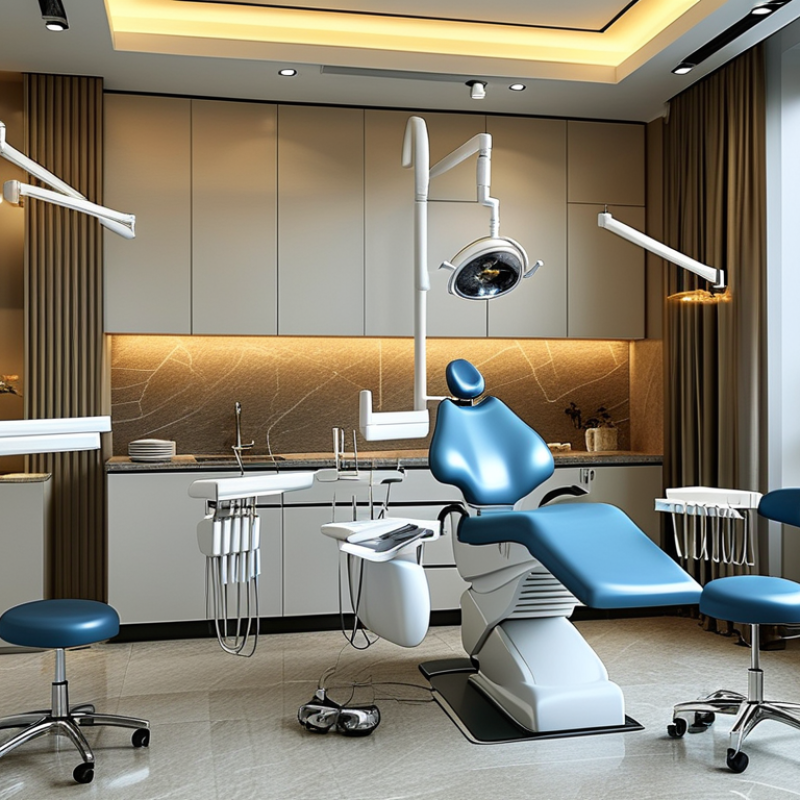
Dental Operating Light Height Standards in China
Dental Operating Light Height Standards in China
China does not prescribe one universal height for every dental operating light. In practice, installers usually coordinate the light with the dental chair, ceiling height, and dentist’s working posture. A practical planning range is about 1,800 to 2,200 millimeters from the finished floor to the light head or mounting point. This is guidance, not a fixed legal requirement.
The light head should normally remain about 700 to 1,000 millimeters from the patient’s mouth during treatment. Its arm must move smoothly without touching the chair, overhead cabinet, or dental unit. For a room with a 2.4 to 3.0 meter ceiling, a ceiling-mounted structure often needs careful clearance checks. Wall-mounted models may require a different height because the swing arm follows another movement path.
Measure twice.
Chinese clinics should verify the design against the project’s medical electrical requirements, local construction rules, and the equipment’s installation instructions. Relevant safety standards, including applicable GB requirements, may influence grounding, insulation, illumination, and mechanical stability. A qualified installer should check the final position with the chair fully raised and reclined. This step is often missed. It can reveal collision risks that drawings do not show. Dentists also differ in posture, so a height that feels correct in one clinic may cause shoulder strain in another. A short trial installation is wiser than relying only on a standard number.
Key Factors That Determine the Correct Mounting Height
China Top 10 Dental Operating Lights Standard Height?
The correct mounting height depends on more than ceiling dimensions. A fixed “standard” can create shadows, neck strain, or limited arm movement. In many dental rooms, installers begin with an arm pivot about 2.0–2.2 meters above the finished floor. This range is only a practical reference, not a universal requirement.
Operator height matters greatly. A 160-centimeter dentist and a 190-centimeter dentist do not use the same working geometry. The light head should reach approximately 700–1,000 millimeters above the patient’s oral cavity without touching the clinician’s shoulders or the imaging equipment.
The patient chair’s highest and lowest positions must be tested. Check the assistant’s access too.
Light performance also matters. ISO 9680:2021 specifies dental operating-light illuminance within an 8,000–40,000 lux range, depending on the operating condition. EN 12464-1:2021 emphasizes appropriate lighting for healthcare work areas, visual comfort, and glare control. Height alone cannot deliver these results.
A lamp mounted too high may require excessive intensity and increase glare. A lamp mounted too low may obstruct instruments or create contamination risks during adjustment.
A proper installation should simulate treatment, not just measure the ceiling. Test crown preparation, endodontic access, and reclining-chair positions. Recheck after flooring, cabinetry, and equipment installation. This step is often missed. The ideal height may still need adjustment.
Recommended Height Ranges for Different Dental Treatment Areas
Dental operating lights do not have one universal standard height. The practical target depends on the treatment zone, chair movement, and clinician’s posture. ISO 9680:2014 focuses on dental operating light performance, but it does not prescribe one floor-to-light height. In practice, a ceiling-mounted light head often works best at 165–190 cm above the finished floor when the chair is reclined. Keep the light head about 75–100 cm from the patient’s mouth.
For general restorative treatment, a 170–185 cm light-head height usually provides clear access without striking the clinician’s shoulders. Endodontic and oral surgery areas may need 180–200 cm, especially when clinicians stand and use microscopes or additional instruments.
Pediatric treatment benefits from a lower adjustment range, commonly 155–175 cm, because the chair and patient position change more frequently. These figures are planning ranges, not legal requirements.
Lighting quality matters as much as height.
EN 12464-1:2021 lists 1,000 lux for dental treatment areas and emphasizes glare control, uniformity, and high color rendering. A bright light placed too low can create shadows from the operator’s head. A high light can reduce intensity at the oral cavity. During chairside checks, I would measure the actual beam at the patient’s mouth, not only the ceiling dimension. One assumption may fail. Final adjustment should follow a mock procedure with the tallest and shortest clinicians.
Top 10 Dental Operating Lights and Their Height Features
China Top 10 Dental Operating Lights Standard Height?
In dental surgeries, height depends on the ceiling, chair movement, and operator position. A practical top-ten shortlist includes fixed ceiling lights, dual-head ceiling systems, track-mounted lights, wall-mounted lights, mobile lights, surgical-style lights, compact LED lights, long-arm lights, short-arm lights, and chair-integrated lights. Their useful height features differ considerably.
Fixed ceiling lights commonly place the light head about 2.1 to 2.4 metres above the floor. Dual-head systems need more ceiling clearance and wider arm movement. Track-mounted units suit rooms with flexible layouts, while wall-mounted lights often work well in smaller clinics. Mobile units can adjust from roughly 1.5 to 2.2 metres. Chair-integrated lights usually follow the chair’s lifting range. Measure twice.
Long-arm designs may reach the oral cavity without forcing the clinician to lean forward. Short-arm models save space but can limit positioning near large patients. Compact LED lights are easier to install under lower ceilings. Surgical-style heads provide broad illumination, although they may feel excessive in a small operatory. Clearance comes first.
During site surveys, I check the lowest light position, door swing, cabinet height, and the clinician’s seated eye level. A light head positioned around 80 to 100 centimetres above the patient’s face often supports comfortable access, but this is not universal. Chair geometry changes everything. Some height charts look precise, yet real rooms are rarely perfect. A careful installer should test movement with the chair fully raised, reclined, and rotated before final installation.
China Top 10 Dental Operating Lights Standard Height? - Top 10 Dental Operating Lights and Their Height Features
Typical height and performance ranges for dental operating lights. Final installation dimensions should be confirmed against the ceiling structure, local building codes, and the selected product.
| No. |
Dental Operating Light Type |
Recommended Ceiling Height |
Typical Light-Head Center Height
Above Floor |
Vertical Adjustment Range |
Illumination Range |
Color Temperature |
Main Height Feature |
| 1 |
Standard Ceiling-Mounted LED Light |
2.70–3.20 m |
2.10–2.35 m |
300–500 mm |
8,000–50,000 lux |
4,000–5,500 K |
Balanced configuration for general dental treatment rooms with standard ceiling clearance. |
| 2 |
Short-Arm Ceiling-Mounted LED Light |
2.40–2.80 m |
2.00–2.25 m |
250–400 mm |
7,000–40,000 lux |
4,200–5,000 K |
Compact arm geometry reduces the required ceiling height and suits rooms with limited overhead space. |
| 3 |
Long-Reach Ceiling-Mounted LED Light |
2.80–3.50 m |
2.15–2.45 m |
400–700 mm |
10,000–60,000 lux |
4,000–5,500 K |
Extended reach provides greater positioning flexibility but normally requires a higher or stronger ceiling mounting point. |
| 4 |
Dual-Arm Dental Operating Light |
2.70–3.30 m |
2.10–2.40 m |
350–600 mm |
15,000–70,000 lux |
4,000–5,500 K |
Two independently positioned light heads support procedures requiring different illumination angles. |
| 5 |
Wall-Mounted LED Operating Light |
2.40–3.00 m |
1.90–2.25 m |
300–550 mm |
8,000–50,000 lux |
4,000–5,500 K |
The mounting height depends mainly on wall reinforcement and chair position rather than ceiling height. |
| 6 |
Mobile Floor-Stand LED Light |
Not applicable |
1.60–2.35 m |
500–750 mm |
8,000–40,000 lux |
4,000–5,500 K |
Height is controlled by the adjustable column, making it suitable for temporary rooms or rental clinics. |
| 7 |
Ceiling-Recessed LED Light |
2.70–3.20 m |
2.05–2.35 m |
150–350 mm |
10,000–50,000 lux |
4,000–5,500 K |
A shallow recessed assembly keeps the light close to the ceiling and improves clearance in the treatment area. |
| 8 |
High-CRI Dental LED Light |
2.60–3.20 m |
2.05–2.35 m |
300–550 mm |
10,000–60,000 lux |
4,000–5,500 K |
Designed for improved shade recognition, commonly using a color-rendering index of approximately Ra 90 or higher. |
| 9 |
Sensor-Controlled LED Light |
2.50–3.20 m |
2.00–2.35 m |
250–550 mm |
8,000–50,000 lux |
4,000–5,500 K |
Hands-free controls allow brightness or power changes without touching the light head. |
| 10 |
Compact Portable Dental Light |
Not applicable |
1.40–2.10 m |
400–700 mm |
5,000–30,000 lux |
4,000–5,000 K |
Portable construction and a smaller head make it appropriate for auxiliary treatment spaces and mobile dental services. |
Height Reference: In most dental rooms, the light head is positioned approximately 2.00–2.40 m above the finished floor during normal use. The final height should maintain adequate operator clearance, avoid collision with cabinets or imaging equipment, and allow the light field to be centered over the oral cavity.
How to Adjust and Verify Dental Light Installation Height
A fixed “standard height” for dental operating lights does not exist. The correct height depends on the dental chair, ceiling clearance, operator position, and light-arm movement. ISO 9680:2021 focuses on dental operating-light performance, including illuminance and beam control, rather than one universal mounting height. In practice, many installations place the light head about 1.8–2.2 meters above the floor, allowing approximately 700–1,000 millimeters between the light and the patient’s mouth.
Adjustment should begin with the chair in its lowest and highest working positions. Recline the chair fully, position the patient headrest, and move the light over the oral cavity. The arm should travel smoothly without touching the ceiling, monitor, cabinet, or clinician’s shoulder. A fixed 2.0-meter rule seems convenient, but it may fail in rooms with low ceilings. I have seen excessive height reduce illumination and create awkward shadows.
Verification requires measurement, not visual judgment. Use a calibrated lux meter at the patient’s mouth, with the beam centered on the oral cavity. ISO 9680:2021 commonly guides dental-light performance testing around high clinical illuminance, while EN 12464-1:2021 recommends roughly 1,000 lux for demanding examination areas. Record readings at the central spot and across the beam edge. Check both upright and reclined positions. Recheck after installation, because arm tension, chair replacement, and ceiling movement can alter the original setup. The first measurement is not always the final truth.
China Top 10 Dental Operating Lights Standard Height
Dental operating lights do not have one universal fixed ceiling-mount height. Installation is normally verified by measuring the working distance between the light head and the patient’s oral cavity. A practical reference range is approximately 700–1,000 mm, adjusted to the dental chair, operator position, and light-arm movement.
Use these ten working-distance checkpoints during installation. After positioning the dental chair and patient headrest, measure from the light-emitting surface to the oral cavity, confirm unobstructed arm movement, and verify that the selected height remains comfortable for both the dentist and assistant.
Conclusion
This article explains the key considerations for determining the proper height of a dental operating light in China. It addresses the question, “What is the standard height for a dental operating light,” while emphasizing that the ideal measurement depends on ceiling height, mounting method, treatment position, dentist ergonomics, patient access, and the light’s adjustment range. General recommendations are provided for different dental treatment areas, including standard operatories, surgical rooms, and spaces with limited ceiling clearance.
The article also compares the height features commonly found in the top ten categories of dental operating lights, focusing on arm reach, vertical movement, installation flexibility, and working distance rather than specific manufacturers. Finally, it outlines practical steps for adjusting and verifying installation height, such as checking illumination coverage, minimizing shadows, confirming comfortable positioning for the dental team, and testing the light from multiple treatment angles before finalizing the installation.

 Barclay Medical