Why Is Oil Free Air Needed for Dental Procedures 7 Tips?

Time:2026-10-20 Author:Sienna
0%

Dental care depends on clean, stable air more than many patients realize. A compressor drives handpieces, three-way syringes, polishing tools, and drying functions. If that air carries oil, moisture, particles, or microbial contamination, it can reach delicate oral tissues and instruments. Why is oil-free air necessary for dental procedures? The answer involves patient safety, equipment reliability, and clinical consistency.

The World Health Organization’s Global Oral Health Status Report (2022) estimates that oral diseases affect nearly 3.5 billion people worldwide. That scale makes basic contamination control important in every operatory, not only in major hospitals. The CDC’s Summary of Infection Prevention Practices in Dental Settings identifies dental handpieces and air-water syringes as devices that can generate spray and aerosols. Clean compressed air cannot remove every infection risk. It does, however, reduce one preventable source of contamination when combined with filtration, drainage, disinfection, and proper maintenance.

The machine room matters. A neglected compressor can produce warm, wet air that smells faintly of oil. That detail should not be ignored. ISO 8573-1 provides a recognized framework for compressed-air purity, including particles, water, and oil. Dental practices should select equipment according to the manufacturer’s specifications and applicable clinical standards, rather than trusting marketing language alone.

This guide presents seven practical tips for choosing and maintaining oil-free dental air systems. It covers compressor sizing, sterile filtration, moisture control, noise, pressure stability, servicing, and documentation. Not every clinic needs the same configuration. That is easy to overlook. A qualified dental equipment professional should verify the final design before installation.
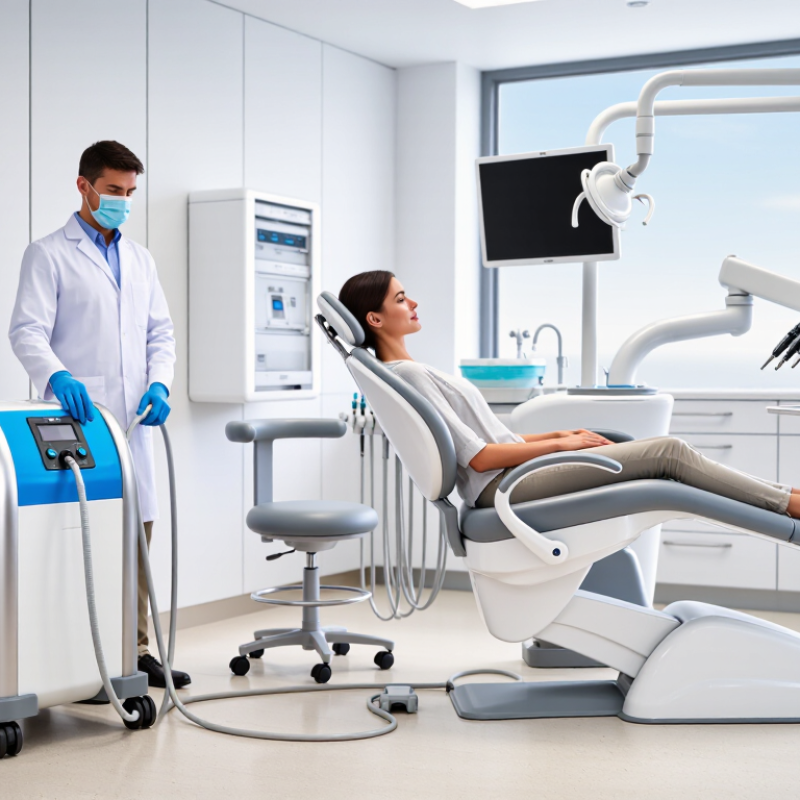
Why Is Oil Free Air Needed for Dental Procedures 7 Tips?

The Role of Compressed Air in Modern Dental Procedures

Compressed air is the unseen utility behind many dental procedures. It drives high-speed handpieces, clears moisture, supports air-water syringes, and helps maintain a visible operating field. Any contamination can reach instruments, surfaces, or a patient’s mouth. The CDC warns that dental handpieces and air-water syringes may retract oral fluids without proper controls. That makes air quality part of infection prevention, not merely equipment performance.

Seven practical checks matter: confirm oil-free generation; specify filtration by ISO 8573-1; monitor pressure at the chair; drain condensate; test air purity regularly; replace filters on schedule; document every service visit. ISO 8573-1 classifies particles, water, and oil. For oil, Class 1 permits no more than 0.01 mg/m³. Class 0 requires a stricter, manufacturer-defined limit. “Oil-free” alone is not enough.

The WHO Global Oral Health Status Report estimates that nearly 3.5 billion people live with oral diseases. That scale increases the importance of dependable clinical systems. In practice, I would inspect the compressor room, tubing, and point-of-use filters together. A clean compressor cannot compensate for contaminated downstream lines.

Small leaks also reduce pressure and create unstable handpiece performance. This is often overlooked. Air testing should follow the facility’s risk assessment and applicable local requirements. Dental teams should review certificates, maintenance records, and alarm settings with a qualified technician. No system is perfect, and routine verification remains essential.

Why Oil-Free Air Is Essential for Patient Safety

Why Is Oil Free Air Needed for Dental Procedures 7 Tips?

Why Oil-Free Air Is Essential for Patient Safety

During dental treatment, compressed air may contact teeth, wounds, instruments, and nearby tissues. Oil vapors can leave an invisible film on these surfaces. They may also carry particles through handpieces or air-water syringes. Oil-free air reduces this contamination risk, although it is not automatically sterile.

Check that the compressor is designed for dental use. Confirm air quality against applicable clinical standards, such as ISO 8573-1. Install suitable particulate and microbial filtration. Drain moisture regularly, because wet lines encourage contamination. Monitor pressure at the point of use, not only at the compressor. Replace filters according to measured performance and service guidance. Keep maintenance records with dates, pressure readings, and filter changes.

Small details matter. A cracked hose can undermine a clean air system. A neglected drain can create trouble quietly. Inspect tubing, connectors, and handpieces before busy clinics begin. Keep intake air away from disinfectant vapors, dust, and vehicle exhaust. Never assume a new compressor needs no testing. That assumption is convenient, but unsafe. Air testing should follow local dental guidance and the equipment manufacturer’s instructions. Staff should also know how to recognize unusual odor, moisture, pressure changes, or noisy operation. Patient safety depends on the whole air pathway, not one machine.

Seven Tips for Choosing a Dental Oil-Free Air System

Why Is Oil Free Air Needed for Dental Procedures? Seven Tips for Choosing a Dental Oil-Free Air System

Oil-free air protects instruments, restorations, and patient care from lubricant contamination. In a dental room, a faint oily film can affect bonding surfaces and complicate maintenance. Choose a system designed specifically for continuous clinical duty.

Tip 1: Check the required air quality class. The system should meet recognized medical compressed-air standards. Tip 2: Match airflow to every chair, handpiece, scaler, and suction-related demand. More capacity is not automatically better. Tip 3: Confirm pressure stability during simultaneous procedures. A pressure drop can interrupt treatment at an inconvenient moment. Tip 4: Review the dryer and filtration arrangement. Moisture can damage equipment and encourage internal corrosion. Dry air matters.

Tip 5: Measure operating noise before installation. A quiet compressor improves communication and reduces patient anxiety. Tip 6: Ask about service intervals, drain design, and filter replacement access. Technicians need safe, practical access. Tip 7: Verify alarms and monitoring functions. Staff should notice overheating, high temperature, or pressure changes early. Installation space also deserves attention. A compact unit may fit neatly, yet restricted ventilation can shorten its service life. Energy use should be compared at the actual workload, not only in catalog conditions. This is where selection can become imperfect. Teams sometimes focus on purchase price and overlook recovery time, maintenance labor, or future chair expansion. A written load assessment, reviewed by a qualified dental equipment technician, makes the decision more reliable.

Maintenance Steps for Clean and Reliable Dental Air

Oil-free air is needed in dental procedures because compressed air may reach handpieces, syringes, and treatment areas. Oil vapors can affect instruments, materials, and patient comfort. Clean air also supports reliable operation during long procedures. Maintenance matters as much as compressor selection.

Check the intake filter regularly, especially in dusty rooms. A blocked filter makes the compressor work harder. Drain the receiver tank on schedule to remove collected moisture. Inspect the automatic drain, because it can stick without obvious warning. Replace air and sterile-line filters according to measured pressure drop, not guesswork. Test the dryer and confirm that air remains dry during busy clinical hours. Moisture can hide inside tubing. Clean and disinfect external tubing and connectors using approved procedures. Never use harsh chemicals without checking material compatibility. Finally, record inspections, filter changes, pressure readings, and technician visits.

Small details matter. A loose fitting may create noise before it causes failure. A forgotten drain can send water toward sensitive equipment. Staff should listen for unusual cycling and report it early. Qualified technicians should verify air quality against applicable clinical standards and the equipment’s service instructions. Records improve traceability, although many clinics document too little. That gap deserves attention. A practical schedule may still need adjustment after seasonal humidity changes or renovations. Reliable dental air is built through repeated checks, not one perfect installation.

Why Is Oil-Free Air Needed for Dental Procedures? 7 Maintenance Tips

Oil-free dental air helps reduce the risk of oil contamination in instruments, restorative materials, and treatment areas. This chart shows a typical maintenance schedule for clean and reliable compressed air. Actual intervals should follow the compressor, dryer, filter, and local infection-control requirements.

How Air Quality Affects Dental Equipment and Treatment Results

Why Is Oil Free Air Needed for Dental Procedures 7 Tips?

Air quality quietly influences dental equipment, clinical efficiency, and treatment results. Compressed air may contact instruments, tooth surfaces, or restorative materials. Oil vapor, moisture, and fine particles can contaminate these areas. They may also block valves, damage handpiece bearings, and shorten equipment life.

A practical approach includes seven habits. Choose an oil-free air source, install suitable intake filtration, and control room dust. Remove collected moisture from the air receiver regularly. Monitor the air’s dew point, especially in humid climates. Replace filters according to measured performance, not guesswork. Inspect hoses and connectors for cracks. Record maintenance dates and pressure changes. Small records can reveal problems early.

Clean air supports stable instrument speed and more predictable delivery. Moisture can dilute materials or interfere with bonding.

Particles may leave visible marks on polished surfaces. Inconsistent pressure can also make delicate procedures feel less controlled.

Clinicians should check airflow at the point of use, not only near the compressor. That difference matters.

Perfect air is an unrealistic phrase. Even well-maintained systems can develop hidden contamination. A clean-looking hose is not proof of clean air. Regular testing remains necessary, although busy clinics may postpone it. That is the weak point. Reliable treatment depends on disciplined checks, suitable filtration, and quick action when air quality changes.

FAQS

Why is oil-free compressed air important in dental procedures?

It prevents lubricant contamination from reaching instruments, tooth surfaces, and restorative materials. Clean air supports safer, more predictable treatment.

What air quality standard should a dental clinic consider?

Use a recognized compressed-air classification system covering particles, water, and oil. Oil Class 1 allows no more than 0.01 mg/m³.

Is an “oil-free” label enough?

No. Verify filtration, testing results, service records, and the manufacturer’s defined limits. Labels can simplify a complicated decision.

How should a clinic match air capacity to its needs?

Assess every chair, handpiece, scaler, and related demand. Extra capacity is not always better. Actual workload matters.

Why is pressure stability important during treatment?

Pressure drops can interrupt handpiece speed and reduce clinical control. Check pressure at the chair, not only near the compressor.

How does moisture affect dental equipment?

Moisture can encourage corrosion, block valves, and interfere with bonding materials. Drain condensate regularly and monitor the air’s dew point.

What maintenance checks should dental teams perform?

Replace filters on schedule, inspect hoses, check connectors, and record pressure changes. Small records reveal problems early.

Does compressor noise matter in a dental room?

Yes. Lower noise improves communication and may reduce patient anxiety. Measure operating noise before installation.

Can a clean compressor guarantee clean air at the chair?

No. Downstream tubing, leaks, and point-of-use filters may introduce contamination. Inspect the entire air path.

What common mistake should clinics avoid when selecting an air system?

Do not focus only on purchase price. Consider ventilation, maintenance labor, recovery time, and future chair expansion. This is often missed.

Conclusion

Compressed air is a vital part of modern dental procedures, powering handpieces, syringes, scalers, and other clinical instruments. Why is oil-free air necessary for dental procedures? It helps protect patients from contact with oil particles, odors, moisture, and other contaminants that may affect treatment safety and comfort. Clean air also supports accurate procedures by reducing the risk of contamination and preserving the performance of dental equipment.

When choosing a dental oil-free air system, practices should consider air purity, flow capacity, pressure stability, noise level, filtration, storage, and system reliability. Regular maintenance is equally important: replace filters on schedule, drain moisture, inspect connections, check pressure, and follow professional servicing recommendations. Consistent air quality can extend equipment life, improve instrument operation, and contribute to dependable treatment results. A well-planned, properly maintained oil-free air system is therefore an essential part of an efficient and patient-focused dental environment.

Sienna

Sienna

Sienna is a skilled marketing professional with a deep expertise in our company’s core products and services. With a passion for innovation and detail, she plays a pivotal role in crafting insightful blog posts that not only highlight the unique features of our offerings but also provide valuable......